

Living in the Hyattsville Arts District: A Complete Neighborhood Guide for Home Buyers (2026)
The Hyattsville Arts District — also known as the Gateway Arts District — is one of the most compelling neighborhoods for home buyers in the entire DC metro area right now. If you want walkable urban energy, genuine community identity, Metro and MARC rail access, and real estate prices that are still well below comparable neighborhoods in DC or Montgomery County, the Arts District delivers on all four. As of early 2026, the median home value in Hyattsville sits around $402,000 to $419,000, making this one of the most affordable walkable communities within a 10-mile radius of downtown Washington.
But this neighborhood is not just affordable — it's genuinely interesting. If you've been priced out of Takoma Park, frustrated by the sameness of newer suburbs, or you're relocating to DC and want a neighborhood with real character, the Arts District deserves a serious look. Here's everything you need to know before you buy.
What Is the Hyattsville Arts District?
The Hyattsville Arts District — officially called the Gateway Arts District — runs along Baltimore Avenue (Route 1) through the southern portion of Hyattsville, touching into Mount Rainier and Brentwood. It was established as an arts-based economic development initiative by Prince George's County, and it has grown into one of the most culturally distinctive neighborhoods in the Maryland suburbs.
What makes it distinctive is the density of creative energy packed into a walkable corridor: murals covering entire building faces, working artist studios, gallery spaces, independent restaurants, and a community that genuinely prizes diversity and local identity. This is not a staged arts district built around a developer's vision. It evolved organically, and you can feel the difference.
The neighborhood is anchored by a handful of landmark institutions and businesses that long-time residents cite as the backbone of the community:
Franklin's Restaurant, Brewery & General Store — a beloved local institution combining a full-service brewpub with rotating art exhibits and a quirky general store
Busboys and Poets — the DC-born social enterprise restaurant and bookstore with a Hyattsville location on Route 1
Pyramid Atlantic Art Center — a printmaking, papermaking, and book arts center with gallery space and classes
Vigilante Coffee — a community coffee house with deep roots in the neighborhood
Haraka Run and Walk — Prince George's County's first running specialty store, opened in 2025 at 5501 Baltimore Avenue
The Gateway Arts District is physically centered on Baltimore Avenue between roughly Jefferson Street to the north and the Mount Rainier border to the south. The surrounding residential blocks — featuring a mix of brick bungalows, cape cods, rowhomes, and Victorian-era houses — are where buyers actually live.
Hyattsville Arts District Real Estate: What to Expect in 2026
Here is the current market picture for Hyattsville as of early 2026:
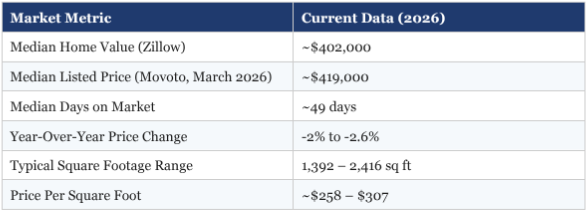
The housing stock in the Arts District and surrounding Hyattsville blocks is primarily mid-century construction — cape cods, brick ranchers, and bungalows built from the 1940s through the 1960s, with a meaningful supply of pre-1939 homes that tend to carry more architectural character. There is also newer development along the Baltimore Avenue corridor, including townhome communities and mixed-use residential buildings.
Price points vary noticeably by street and property type. Arts District-adjacent rowhouses and townhomes with rooftop terraces — the brick units that line the walkable core — tend to command premiums over the ranch-style single-family homes a few blocks off the corridor. Knowing which blocks offer the best value for your lifestyle is exactly where a local agent's knowledge pays off.
How Does Hyattsville Compare to Nearby Neighborhoods?
Context matters. Here is how Hyattsville sits relative to the markets immediately surrounding it:
Takoma Park (MoCo side): Median prices typically $150,000-$200,000 higher for comparable homes. Strong walkability and arts identity, but limited inventory and intense competition.
Mount Rainier: Hyattsville's southern neighbor, similar price points, slightly less developed commercial corridor, same general community character.
College Park: Roughly comparable prices, stronger new construction presence, University of Maryland-adjacent appeal, slightly less walkable core.
DC (Petworth / Brookland): $150,000 to $300,000 higher for comparable square footage. Higher property taxes. Less yard space.
Silver Spring: Higher prices in the downtown core, more condominium inventory. A different product for a different buyer.
The conclusion most buyers draw: Hyattsville offers the closest thing to DC walkability and character at Prince George's County prices. For buyers who want a real neighborhood — not a car-dependent subdivision — and don't want to pay the DC premium, the Arts District is the best value in the corridor.
Property Taxes in Hyattsville: The Dual Structure You Need to Know
This is the detail that catches buyers off guard more than any other, and I want to be direct about it because it affects your true monthly cost.
Hyattsville has a dual property tax structure. You pay both Prince George's County property taxes AND a separate City of Hyattsville property tax on top. Most of the neighboring communities in PG County do not have a city-level property tax. This makes Hyattsville's effective tax rate meaningfully higher than comparable communities nearby.
The dual tax structure is a real cost difference — roughly $2,500-$3,000 more per year than buying just outside Hyattsville's city limits in communities like Mount Rainier or Riverdale Park. Buyers need to factor this into their budget. That said, the city uses its revenue for services that residents genuinely notice — active code enforcement, public art investment, community programming, and a responsive local government.
Whether the trade-off is worth it depends on your priorities. Many buyers decide the walkability, community identity, and amenity density of Hyattsville proper justifies the higher tax load. Others specifically target just outside the city limits to avoid it. I can walk you through both options when we talk.
Getting Around: Transit, Commute, and the Purple Line
Transit access is one of Hyattsville's biggest selling points, and it's about to get significantly better.
Metro Access
The neighborhood is currently served by two primary Metro options on the Green and Yellow lines. The Hyattsville Crossing station (formerly Prince George's Plaza) is accessible via bus from the Arts District corridor, and the West Hyattsville station is within about a mile and a half walking distance. From either station, downtown DC is roughly 20-25 minutes by Metro.
Bus service along Baltimore Avenue connects the Arts District corridor to both the Rhode Island Ave-Brentwood station (Red Line) to the south and the College Park-U of MD station (Green Line) to the north. The 83 Metrobus runs directly through the Gateway Arts District and is frequently used by residents who are car-free or car-optional.
MARC Rail
The Riverdale Park MARC station (Camden Line) is less than a mile from the Arts District core — close enough to walk directly, or take the trail connection. MARC service provides an alternative commute route into Union Station and downtown DC. For buyers with commutes to Baltimore or points between, MARC rail from Riverdale is a significant advantage.
The Purple Line: A Major Upcoming Transit Upgrade
The Purple Line light rail — a 16.2-mile line connecting Bethesda to New Carrollton through College Park — is currently slated to open in late 2027. When it opens, it will dramatically improve east-west connectivity across the Maryland suburbs, allowing riders to transfer between the Red, Green, Yellow, Silver, and Orange lines without going into central DC.
For Arts District buyers, the Purple Line matters for two reasons. First, it will add a major transit option to the corridor and meaningfully improve access to the entire Maryland suburb network. Second — and this is the investment angle — properties near planned Purple Line stations have historically appreciated as opening dates approach. Buying in the Arts District now, before the line opens, is a way to get ahead of that appreciation curve.
Driving
Route 1 (Baltimore Avenue) is the spine of the neighborhood and connects directly to DC to the south and College Park to the north. The Beltway (I-495) is accessible within a few miles. For buyers who do drive, the neighborhood's position between DC and the Beltway suburbs means reasonable access in most directions — though Route 1 itself can be congested during peak hours.
Schools in Hyattsville
Hyattsville falls within the Prince George's County Public Schools system. As with most urban school districts, performance varies significantly by school. The public schools serving the Arts District area have received mixed ratings, and this is something buyers with school-age children should research carefully.
Private school options in the area include DeMatha Catholic High School, a well-regarded private boys' school known for its academics and athletics. Many families in the Arts District who prioritize education either choose private schools, enroll in magnet programs within PGCPS, or factor the school conversation into their neighborhood decision-making early.
I encourage every buyer with school-age children to contact PGCPS directly about current boundaries, magnet program options, and any school improvement initiatives for their specific address. School assignments can vary even street to street in some areas.
Who Lives in the Hyattsville Arts District?
The Arts District attracts a distinctive mix of residents, and understanding the community helps buyers know whether it's the right fit.
The neighborhood skews younger than most of the Maryland suburbs — the median age in Hyattsville overall is 35, and the Arts District core tends even younger. The community is highly diverse in terms of race, ethnicity, and national origin, and that diversity is one of the things residents consistently cite when asked why they love living there. The Nextdoor community has rated Hyattsville the number one friendliest neighborhood in the city for 2026.
The typical Arts District buyer tends to be one of the following:
First-time buyers priced out of DC who want to stay in an urban, walkable environment
Creative professionals, academics, and government employees who prioritize neighborhood character over square footage
Couples and small families who want proximity to DC without DC property taxes
Relocation buyers — especially those coming from urban environments like New York, Boston, or Chicago — who want to maintain a walkable lifestyle
Buyers who specifically value racial and cultural diversity in their neighborhood
What you won't find here is a neighborhood of identical single-family homes in a quiet cul-de-sac. This is a place with street life, murals, community festivals, and neighbors who know each other. If that sounds like home to you, it probably is.
What Life Actually Looks Like in the Arts District
The annual Downtown Hyattsville Arts Festival in September draws over 100 hand-selected local artists, live music, food vendors, and craft breweries to the corridor — it's one of the most anticipated events on the Route 1 calendar. Throughout the year, gallery openings, open studios, and community events keep the neighborhood activated.
For outdoor recreation, David C. Driskell Community Park covers 32 acres with sports fields, walking paths, and a recreation center. Hyatt Park features a community garden, picnic spaces, and a large playground. The Northwest Branch trail connects to a broader trail network along the Anacostia River system — a significant asset for runners, cyclists, and families.
Day-to-day errands are manageable without a car. Grocery options include Safeway and Giant Food within the corridor, and the Hyattsville Farmers Market provides a local produce option. Capital Bikeshare stations make bike commuting practical for those headed into DC. PG County's The Bus service became free for all riders in mid-2025, which is an underrated perk for car-optional households.
The restaurant scene punches above what you'd expect for a community this size. Franklin's, Busboys and Poets, Vigilante Coffee, and a rotating cast of independent restaurants give the corridor a genuine dining destination quality that residents lean into.
What to Watch For When Buying in the Arts District
A few things I tell every buyer who is seriously considering this neighborhood:
Flood risk: Hyattsville has moderate flood risk — Redfin data indicates about 15% of properties in Hyattsville face risk of severe flooding over a 30-year period. This is particularly relevant for properties near the Northwest Branch and lower-lying blocks. Always check the FEMA flood map for any specific address before making an offer, and budget for flood insurance if the property is in a designated flood zone.
The dual tax structure: As covered above, make sure your budget accounts for both county and city taxes. Run your true monthly cost estimate before falling in love with a purchase price.
Home age and condition: A large portion of the housing stock dates from the 1940s-1960s, with some pre-1939 properties. Older homes can be beautiful and well-built, but they carry higher inspection risk — lead paint, older electrical systems, knob-and-tube wiring, and deferred maintenance are all possibilities. Never waive your home inspection in this market, even in competition.
Purple Line construction impacts: Work is ongoing through 2027. If you're buying along or near the corridor, understand what that means for noise and disruption during construction, and what the long-term upside looks like once it opens.
Street-level specificity matters: The Arts District is not a homogeneous neighborhood. Some blocks are significantly more desirable than others, and price per square foot can vary meaningfully within a few blocks. This is a neighborhood where working with a local agent who knows the micro-geography is not optional — it's the difference between a great buy and a frustrating one.
Frequently Asked Questions About the Hyattsville Arts District
Is the Hyattsville Arts District a good place to buy a home in 2026?
Yes, particularly for buyers who prioritize walkability, community character, and value relative to DC. Prices are modestly down from last year, inventory has increased, and buyers have more negotiating room than in recent years. The upcoming Purple Line opening in 2027 adds a long-term transit upside that strengthens the investment case.
What is the average home price in the Hyattsville Arts District?
As of early 2026, median home values in Hyattsville range from approximately $402,000 (Zillow) to $419,000 (current listings), depending on source and property type. Arts District-adjacent properties with rooftop terraces or significant renovation can trade above that range. Single-family bungalows a few blocks off the corridor tend to come in at the lower end.
How long are homes sitting on the market in Hyattsville right now?
As of March 2026, the median days on market in Hyattsville is approximately 49 days — significantly longer than the 19-day median in 2024. This gives buyers much more time to evaluate and negotiate than the frenetic market of recent years. You are unlikely to need to waive contingencies or make decisions in 24 hours the way buyers did in 2021-2022.
Is the Hyattsville Arts District safe?
Safety perceptions of Hyattsville vary widely, and I want to give you an honest answer rather than a polished one. Like most urban neighborhoods near DC, the Arts District has blocks that feel very safe and walkable and blocks that feel less so. The community is actively engaged in neighborhood improvement, and the residential blocks immediately surrounding the commercial corridor are generally well-maintained. That said, I encourage every buyer to walk the specific blocks they're considering, at different times of day, before making a decision. I'm happy to walk any block with you.
What Metro station serves the Hyattsville Arts District?
The primary Metro access points are the Hyattsville Crossing station (Green/Yellow lines), accessible via bus from the corridor, and the West Hyattsville station (Green line), which is about a mile and a half walk from the Arts District core. The Riverdale Park MARC station (Camden line) is less than a mile from the corridor and is an alternative commute option into downtown DC and Union Station.
How does the Purple Line affect buying in Hyattsville?
The Purple Line light rail is currently expected to open in late 2027. It will run east-west through the Maryland suburbs connecting Bethesda, Silver Spring, College Park, and New Carrollton. For Arts District buyers, it adds future connectivity and strengthens the long-term transit case for the corridor. Historically, neighborhoods near planned transit openings appreciate as opening dates approach — buying before that happens is the opportunity.
What makes the Hyattsville Arts District different from other PG County neighborhoods?
Most of Prince George's County is car-dependent suburban development. The Arts District is the exception — a genuinely walkable corridor with street life, local restaurants, cultural institutions, and a community identity that residents take seriously. It's the closest thing to an urban neighborhood that PG County has, and for buyers coming from DC or other urban markets, it translates in a way that most Maryland suburbs simply don't.
Ready to Explore the Hyattsville Arts District?
I've walked every block of the Arts District and sold homes throughout Hyattsville. If you're thinking about buying here — or anywhere along Route 1 — I offer free, no-obligation consultations. We can look at active listings, talk through the dual tax structure in detail, compare specific streets, and build out a realistic budget for what ownership actually costs here.
Email: Ryan.Hehman@Compass.com | Direct: 443-990-1230
Related articles you may find useful:
DC vs. Maryland Suburbs: Where Should You Actually Live When Relocating to the DC Area?
What Federal Employees and Contractors Need to Know About Buying a Home in DC and Maryland Right Now
Is 2026 a Good Time to Buy a Home in DC or Maryland? What the Data Actually Says
What It Really Costs to Buy a Home in DC or Maryland in 2026